

Speaker Cable Routing Best Practices for Two-Channel Audio Systems
Speaker cable routing is often one of the last steps in assembling a two-channel audio system, yet it can have a significant impact on organization, usability, and overall presentation. This guide covers practical routing techniques, cable management strategies, and ways to maintain a clean, consistent cable layout throughout your system. For a broader explanation of the supports themselves, see our guide to speaker cable elevators.
In This Guide
✓ How to route speaker cables cleanly
✓ Managing long speaker cable runs
✓ Supporting heavy speaker cables
✓ Maintaining consistent cable spacing
✓ When cable risers and cable elevators may be useful
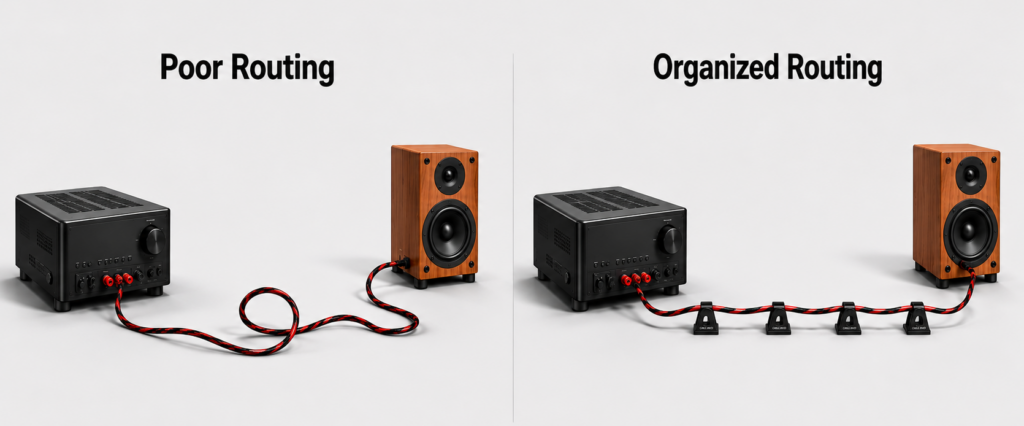
Good Routing vs Poor Routing
Why Speaker Cable Routing Matters
A well-organized audio system is easier to maintain, easier to troubleshoot, and often more visually appealing. Whether you’re building your first stereo system or refining a dedicated listening room, thoughtful speaker cable routing helps create a cleaner and more consistent setup.
Poorly routed cables can create clutter, make equipment difficult to access, and result in uneven cable runs that detract from an otherwise carefully assembled system.
Good cable routing focuses on consistency, organization, and maintaining a deliberate signal path throughout the room.
Cable Arch™ speaker cable risers help maintain consistent cable spacing and routing while reducing contact with flooring surfaces.
Cable Arch™ speaker cable risers help maintain consistent cable spacing and routing while reducing contact with flooring surfaces.
View Cable Arch ProductsKeeping Speaker Cable Runs Consistent
Whenever possible, route speaker cables using a consistent path from the amplifier to each speaker.
This does not mean both cable runs must appear identical, but they should be organized in a predictable and intentional manner.
Benefits include:
- Easier maintenance
- Simpler troubleshooting
- Reduced cable clutter
- Improved visual organization
Many audiophiles spend significant time optimizing speaker placement and equipment positioning. Cable routing deserves similar attention.
Rule of Thumb
Use enough support points to maintain a smooth cable path without sagging, bunching, or resting across large areas of flooring.
Managing Long Speaker Cable Runs
Longer speaker cable runs often present the greatest organizational challenge.
As cable length increases, cables may begin to cross walkways, rest on multiple flooring surfaces, or develop uneven bends and twists.
When planning a longer run:
- Avoid unnecessary excess cable length
- Use gradual curves instead of sharp bends
- Maintain a clear route between amplifier and speaker
- Support cables where needed to maintain spacing
A planned routing path generally produces a cleaner and more manageable installation than allowing cables to follow the shortest available path across the floor.
For longer layouts, many systems start with a Cable Arch 8-Pack or Cable Arch 12-Pack to maintain spacing across the full cable path.
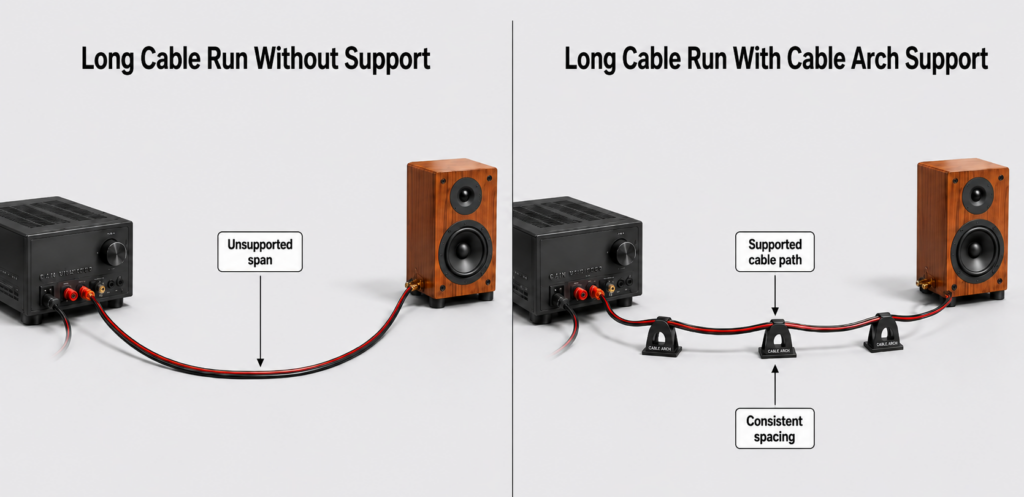
Long Speaker Cable Run Example
Separating Speaker Cables from Power Cords
Most systems contain speaker cables, power cords, interconnects, Ethernet cables, and USB cables running through the same area.
Maintaining an organized layout helps prevent cables from becoming tangled or difficult to identify later.
When possible:
- Route speaker cables separately from power cords
- Avoid large bundles of mixed cable types
- Keep cable paths easy to follow
- Label cables in more complex systems
The goal is not perfection but a layout that remains organized as equipment changes over time.
Supporting Heavy Speaker Cables
Modern speaker cables range from lightweight wire to large, heavily insulated designs.
Heavier cables can sometimes sag, shift position, or place stress on connectors depending on the installation.
Supporting the cable at intervals can help maintain routing consistency while reducing strain caused by unsupported cable weight.
The amount of support required depends on cable diameter, weight, and overall run length.
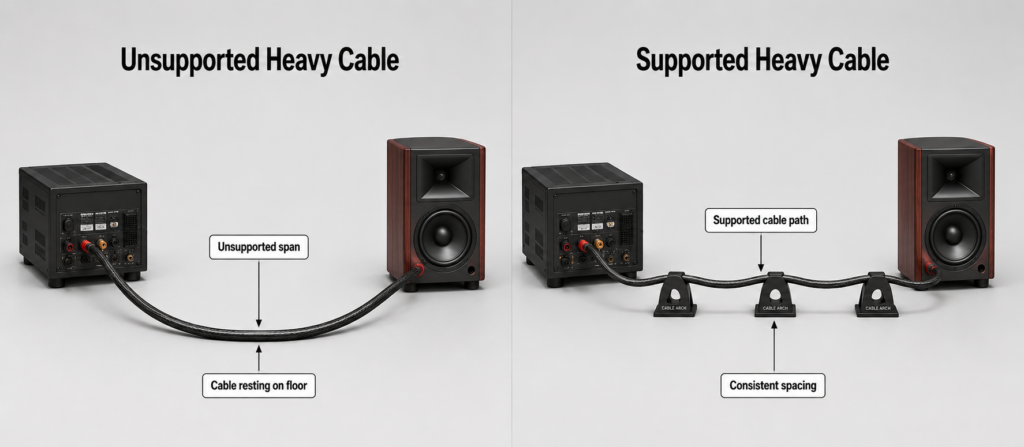
Heavy Cable Support Example
Where Cable Arch Fits
Cable Arch speaker cable elevators are designed to help maintain consistent cable spacing and support a cleaner cable layout throughout the listening room.
Whether used with speaker cables, power cables, or interconnects, they can help create a more organized and intentional routing path.
Using Cable Elevators and Cable Risers
Cable elevators and cable risers are one method of supporting speaker cables along a planned routing path. For systems using paired cable runs, bi-wire layouts, or closely routed stereo cables, Cable Arch Duo provides a dual-channel option.
By elevating the cable above the floor, they can help maintain consistent spacing and a more organized cable layout.
Some listeners use cable elevators primarily for cable management and system organization. Others incorporate them as part of a broader approach to controlling cable routing throughout the listening room.
The number required depends on cable length, cable weight, and desired spacing between supports.
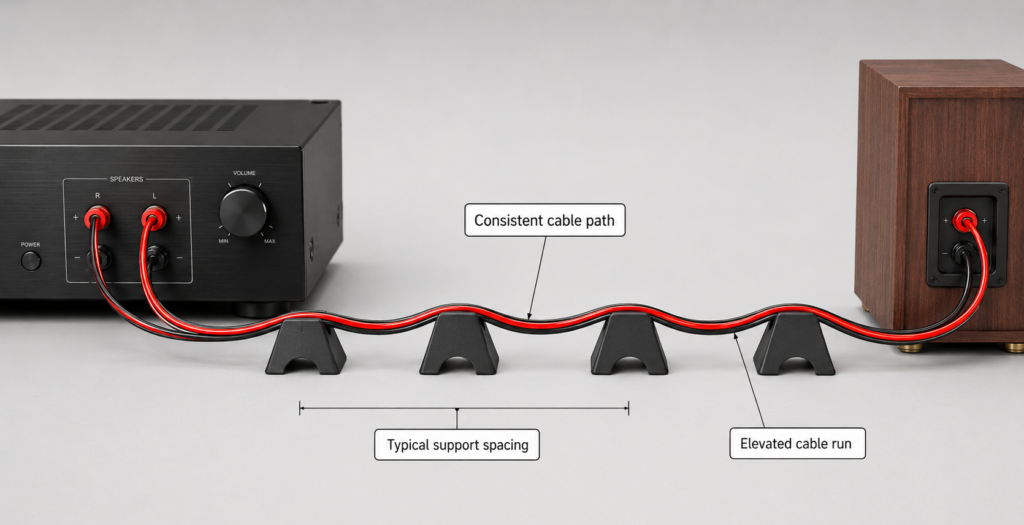
Example Cable Arch Placement
Practical Example
Consider a two-channel system with an amplifier positioned between a pair of speakers.
Rather than allowing each speaker cable to follow an irregular path across the floor, the cables can be routed in smooth, deliberate runs that maintain consistent spacing from the equipment rack to each loudspeaker.
Cable supports can be placed at regular intervals to help maintain that layout while creating a cleaner overall presentation.
The result is a system that appears more intentional, remains easier to service, and better reflects the attention invested in the rest of the setup.
Related Guides
Speaker Cable Elevators: What They Are, How They Work, and When They Matter
Speaker Cable Risers vs Cable Elevators: Is There a Difference?
Final Thoughts

Speaker cable routing may not be the most exciting part of building a two-channel audio system, but it can have a significant impact on organization, usability, and overall presentation.
Whether using cable ties, cable channels, cable elevators, or other management solutions, the goal remains the same: creating a clean, consistent, and deliberate cable layout that complements the rest of the system.
About Cable Arch™
Cable Arch™ speaker cable risers have been manufactured continuously since 2010 and are used by audiophiles worldwide to support organized cable routing and consistent cable spacing in two-channel audio systems.